
Ultrasonic application in the pharmaceutical industry
Ultrasonic cleaning technology has been widely used in many pharmaceutical companies, especially for the cleaning of vials, oral liquid bottles, ampoules, large infusion bottles, and cleaning of butyl rubber stoppers and natural rubber stoppers. For the cleaning of bottles, ultrasonic cleaning technology is used to replace the original brushing machine, which is realized by the processes of inverted water injection, ultrasonic cleaning, internal and external washing, air drying, and turning.
Ultrasonic application in the micro-powder industry
It is well known that to obtain particles of different sizes, the crushed material is ground in a ball mill and sieved through layers of different specifications. After the sieve is used for a long time, the sieve hole will be blocked (such as diamond sieve). Brushing by other methods will destroy the sieve, and the effect is not satisfactory. After many manufacturers’ tests, ultrasonic cleaning will not damage the sieve but also the sieve. The blocked particles are completely recovered.
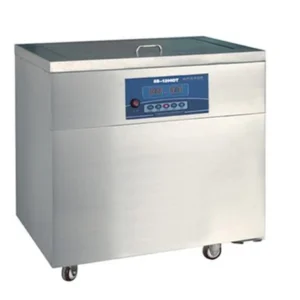
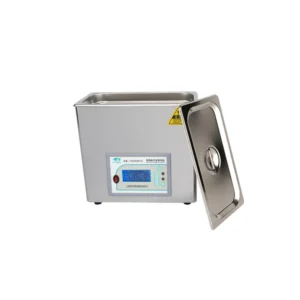
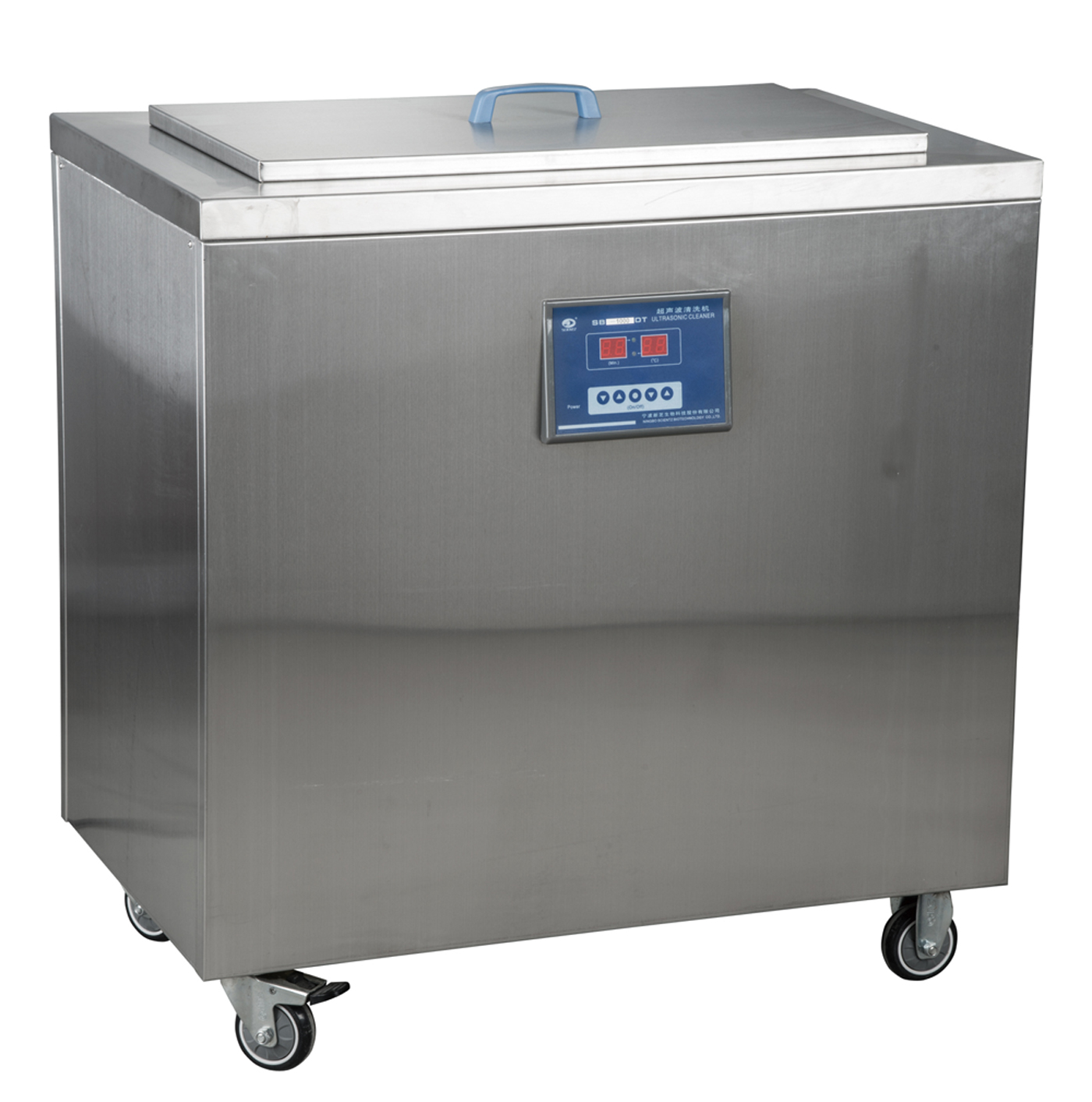
Main Technical Parameters:
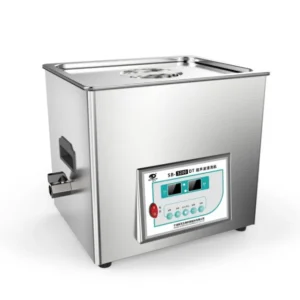
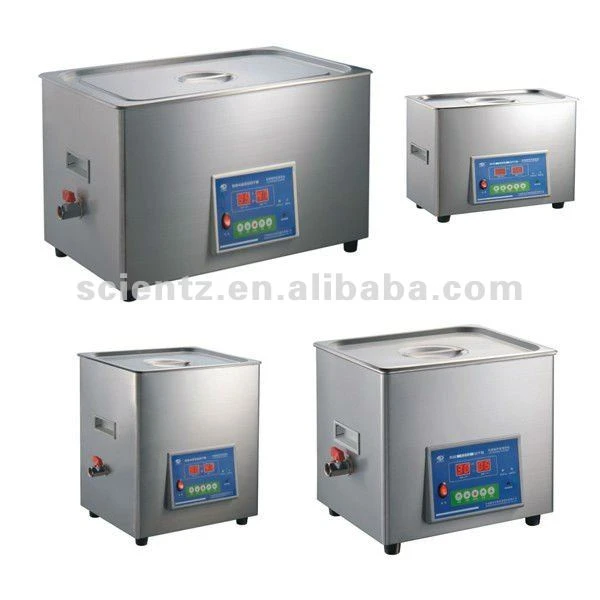
| Model | Inner tank | volume | Frequency
|
Ultrasonic power | Heating power | Temperature adjustable | Time adjustable | Drainage |
Rack |
| ( mm)L/W/H | L | KHz | W | W | OC | min | |||
| SB-100DT | 300*150*100 | 4.5 | 40 | 100 | 200 | RT+5-80 | 1-99 | / | √ |
| SB-120DT | 240*140*100 | 3 | 40 | 120 | 200 | RT+5-80 | 1-99 | / | √ |
| SB-120DT | 240*140*150 | 5 | 40 | 120 | 200 | RT+5-80 | 1-99 | / | √ |
| SB-3200DT | 300*155*150 | 6 | 40 | 180 | 400 | RT+5-80 | 1-99 | / | √ |
| SB-5200DT | 300*240*150 | 10 | 40 | 200 | 800 | RT+5-80 | 1-99 | √ | √ |
| SB-5200DT | 300*240*150 | 10 | 40 | 250 | 800 | RT+5-80 | 1-99 | √ | √ |
| SB-5200DT | 300*240*150 | 10 | 40 | 300 | 800 | RT+5-80 | 1-99 | √ | √ |
| SB-4200DT | 300*240*200 | 14.4 | 40 | 400 | 800 | RT+5-80 | 1-99 | √ | √ |
| SB-12DT | 500*300*150 | 22.5 | 40 | 500 | 1000 | RT+5-80 | 1-99 | √ | √ |
| SB-12DT | 500*300*150 | 22.5 | 40 | 600 | 1000 | RT+5-80 | 1-99 | √ | √ |
| SB-800DT | 600*300*200 | 30 | 40 | 800 | 1000 | RT+5-80 | 1-99 | √ | √ |
| SB-1000DT | 600*300*300 | 54 | 28 | 1000 | 3000 | RT+5-80 | 1-99 | √ | √ |
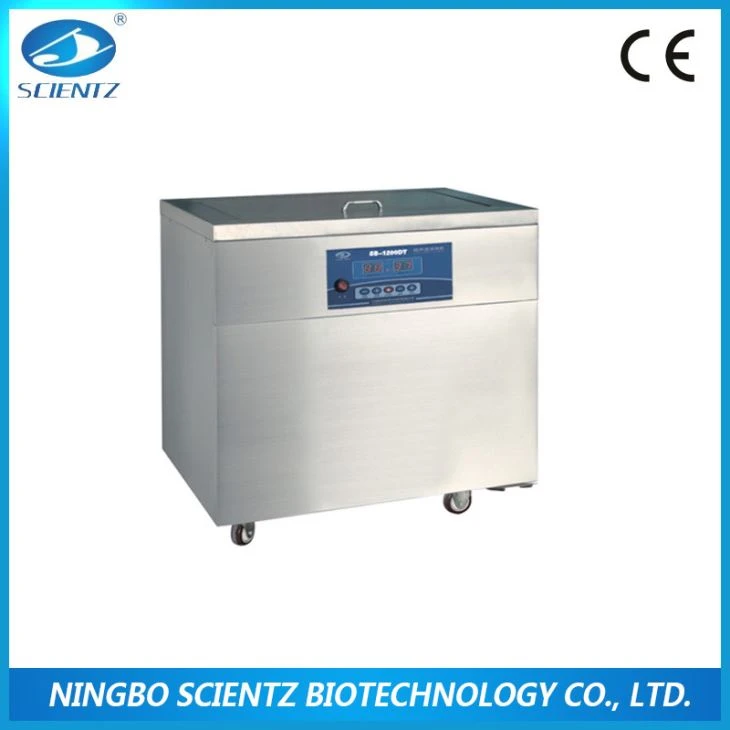
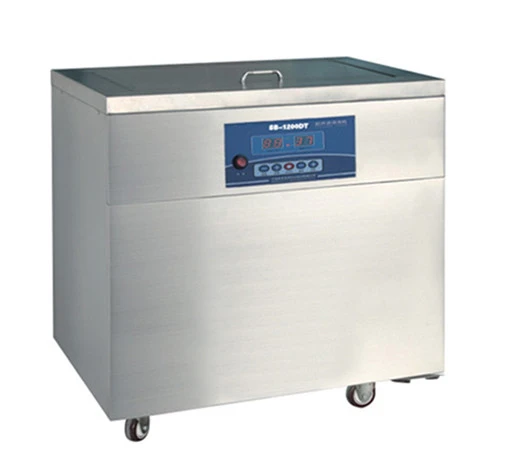
| SB-1200DT | 600*400*300 | 72 | 28 | 1200 | 4000 | RT+5-80 | 1-99 | √ | √ |
| SB-1500DT | 600*500*300 | 90 | 28 | 1500 | 4000 | RT+5-80 | 1-99 | √ | √ |
| SB-1800DT | 600*600*300 | 108 | 28 | 1800 | 4000 | RT+5-80 | 1-99 | √ | √ |
| SB-2000DT | User offer size | 120 | 28 | 2000 | 6000 | RT+5-80 | 1-99 | √ | √ |
| SB-3600DT | User offer size | 207 | 28 | 3600 | 8000 | RT+5-80 | 1-99 | √ | √ |
Ultrasonic cleaning machine transducer common problems and treatment methods
The ultrasonic transducer is damp. Generally, the megohmmeter is used to check the plug connected to the transducer, and the insulation resistance between the positive and negative poles of the transducer can be checked. Insulation resistance is generally required to be greater than 30 megohms.
If this insulation resistance value is not reached, it is likely that the transducer is wet. The maintenance method is to put the whole transducer (excluding the sprayed plastic case) into the oven setting to about 100 °C, dry for three hours or use a hair dryer to remove moisture until the resistance is normal. The transducer vibrator is fired and the ceramic material is broken. The inspection can be combined with the naked eye and the megohmmeter during maintenance.
Generally, as an emergency treatment measure, individual damaged transducers can be disconnected without affecting the normal use of other transducers.