
◣ Product Description
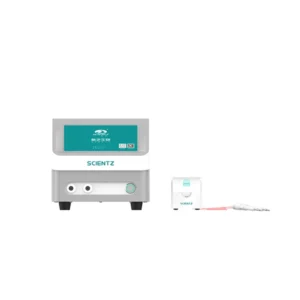
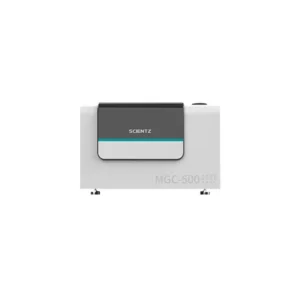
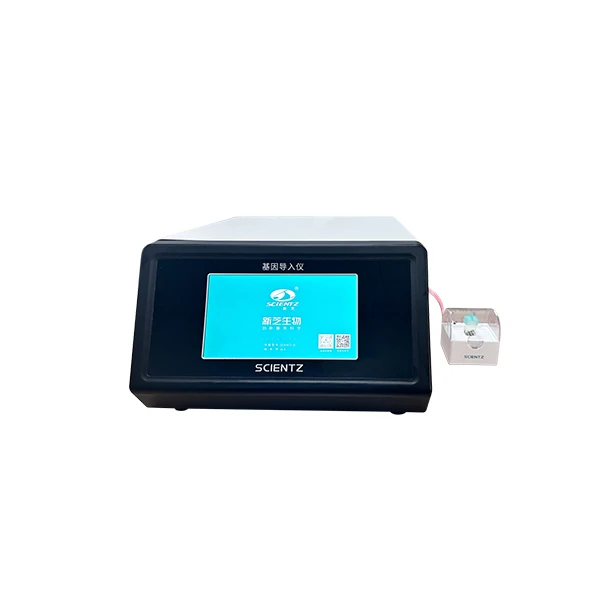
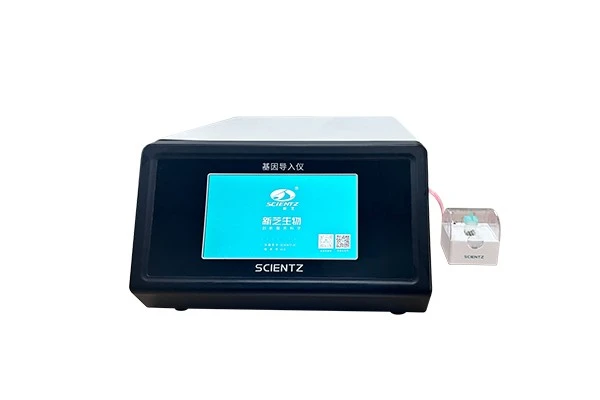
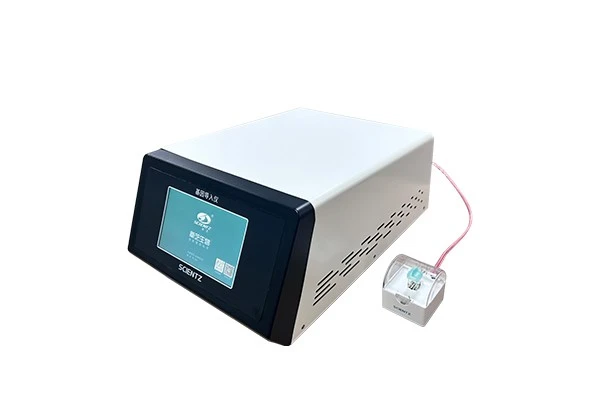
The Gene Electroporator consists of the main unit, gene electroporation cup, and dedicated connecting cables. It primarily uses electroporation to introduce DNA into competent cells, plant and animal cells, and yeast cells. Compared to other methods, the gene electroporator offers high repeatability, high efficiency, ease of operation, and precise control. Additionally, electroporation has no genotoxicity, making it an essential technique in molecular biology.
◣ Working Principle
Electroporation, also known as cellular electroporation, is a key method for introducing exogenous macromolecules like DNA, RNA, SiRNA and proteins, as well as small molecules, into cells. Under the influence of a transient strong electric field, the cell membrane becomes permeable, allowing charged exogenous substances to enter the cell in a manner similar to electrophoresis. Due to the high resistance of the cell membrane’s phospholipid bilayer, the voltage across the cell is mostly borne by the membrane, with minimal voltage in the cytoplasm. This leads to negligible cytotoxicity during electroporation under normal conditions. Once DNA or other substances pass through the membrane, they stay near the membrane before the cell’s mechanisms transport them to the nucleus or other parts of the cell.
Since electroporation relies on physical methods, the molecular characteristics on the cell surface have minimal effect on the process. Unlike chemical transfection or viral vector methods, electroporation can be applied to all cell types and is easily quantifiable.
◣ Applications
Applicable Fields: Food Industry, Gricultural Industry, Veterinary Industry, Bioengineering Industry
Electroporation of bacteria, yeast, and other microorganisms.
🦠 Electroporation of bacteria, yeast, and other microorganisms.
🧫 Transfection of mammalian cells, plant tissues, and protoplasts.
🔗 Cell hybridization and gene fusion.
🏷️ Introduction of marker genes for labeling and indicating purposes.
💊 Introduction of drugs, proteins, antibodies, and other molecules for studying cellular structure and function.
Transfection of mammalian cells, plant tissues, and protoplasts.
Technical Parameters
| Parameter | Details |
|---|---|
| Model | SCIENTZ-2CS |
| Pulse Type | Exponential Decay |
| High Voltage Output | 401 – 3000V |
| Low Voltage Output | 50 – 400V |
| High Voltage Capacitance | 10μF, 25μF, 35μF, 50μF, 60μF |
| Low Voltage Capacitance | 50μF to 1560μF (25μF increment per grade) |
| Parallel Resistance | 500, 1000, 1500, up to 16500 (500 increment per grade) |
| Operating System | Microcomputer Control |
| Time Constant | With adjustable RC time constant |
| Main Unit Dimensions | 40×30×20 cm |
| Net Weight of Main Unit | 5.5 kg |
| Packaging Dimensions | 58×36×25 cm |